
What Is a Ductless Mini Split? A Quick Answer
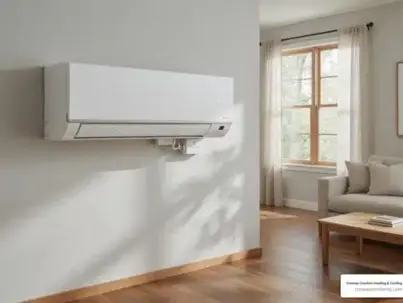
A ductless mini split is a heating and cooling system that works without traditional ductwork. It uses an outdoor compressor connected to one or more indoor air handlers through a small conduit in the wall.
Here’s what you need to know at a glance:
| Feature | Ductless Mini Split |
|---|---|
| Heating & Cooling | Yes — both in one system |
| Requires Ductwork | No |
| Number of Zones | 1 to 8 indoor units per outdoor unit |
| Energy Savings | Avoids 30%+ duct energy losses |
| Lifespan | 15–20 years with proper maintenance |
| Installation | Small 3-inch wall hole — no major renovation |
| Tax Credit Available | Up to $2,000 (ENERGY STAR certified models) |
If your home has no ductwork, has rooms that are always too hot or too cold, or you’re adding a new space, a mini split is likely one of the best options to consider.
Heating and cooling account for nearly half of the average home’s annual energy bill. A mini split can significantly cut that cost — especially in a home where duct losses are already draining energy before conditioned air ever reaches a room.
I’m Brian Conway, owner of Conway Comfort Heating & Cooling, and I’ve been helping homeowners in Central New Jersey find the right ductless mini split solutions since founding the company in 2011. In this guide, I’ll walk you through everything you need to know — from how these systems work to what they cost and how to get the most out of them.
How a Ductless Mini Split Works
To understand why a ductless mini split is so effective, you first have to look at what’s missing: the ducts. In a traditional central air system, a massive fan pushes air through a spiderweb of metal or plastic tubes hidden in your attic, basement, or walls. Along the way, that air leaks out of joints or gains heat from the unconditioned spaces the ducts travel through.
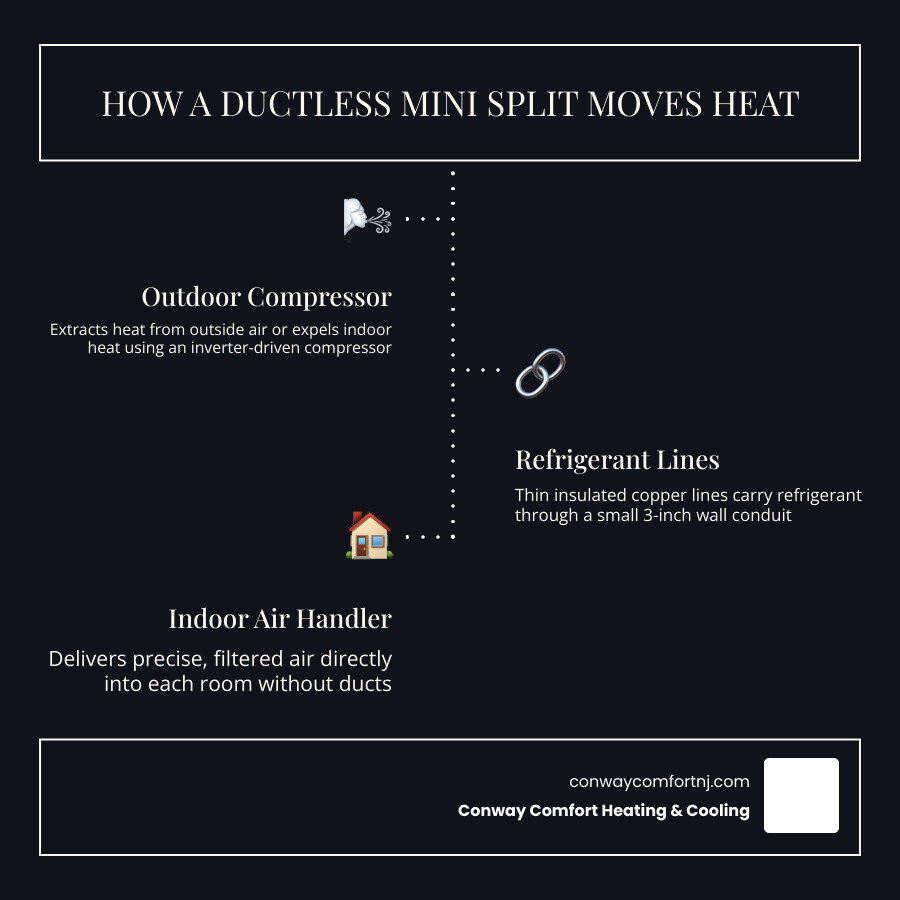
A ductless mini split bypasses this entirely. Instead of moving air through tubes, it moves heat through thin refrigerant lines. The system consists of two primary parts: an outdoor compressor/condenser and one or more indoor air-handling units. These are linked by a “conduit” which houses the power cable, refrigerant tubing, and a condensate drain line.
Most modern mini splits are actually mini split heat pumps. They don’t “create” cold or heat; they move it. In the summer, the indoor unit absorbs heat from your room and sends it outside. In the winter, the process reverses: the outdoor unit extracts heat from the outside air (yes, even when it’s cold!) and pumps it indoors.
One of the “secret sauces” of this technology is the inverter-driven compressor. While traditional AC units are either “all the way on” or “all the way off” (which wastes a ton of energy), an inverter compressor can speed up or slow down like a car’s cruise control. This allows it to maintain a rock-steady temperature without the constant, noisy cycling of older systems.
The Role of the Indoor Air Handler
The indoor unit is what you actually see and hear (or rather, don’t hear) inside your home. These units are incredibly quiet—some operate at just 19 decibels, which is literally quieter than a whisper.
When we install a ductless air conditioner in Hamilton, NJ, homeowners are often surprised by the variety of styles available. You aren’t stuck with just one look:
- Wall-Mounted: The most common style, usually placed high on a wall to stay out of the way.
- Ceiling Cassettes: These sit flush with your ceiling, showing only a decorative grille. They are great for large, open-concept areas because they can distribute air in four directions.
- Floor-Standing: These look a bit like a low-profile radiator and are perfect for rooms with low ceilings or beneath windows.
Beyond just moving air, these handlers often feature multi-stage filtration to trap dust, allergens, and odors, significantly improving your indoor air quality compared to a window unit.
Cooling and Heating Without Ducts
The beauty of the refrigerant cycle is its efficiency. Because the system isn’t forcing air through leaky ducts, it can achieve much higher SEER2 (Seasonal Energy Efficiency Ratio) ratings than central air. Some high-end mini splits reach ratings as high as 42 SEER, whereas a standard central AC might only hit 14 or 16.
This ductless heating and cooling capability makes it a true year-round solution. Whether you’re dealing with a humid July afternoon or a chilly January morning, the same equipment keeps you comfortable. For our neighbors looking for a ductless air conditioner in Princeton, NJ, this means you can finally ditch those clunky window units and space heaters for good.
Benefits of Choosing a ductless mini split System
If you’re on the fence about whether to go ductless or stick with traditional HVAC, the numbers tell a compelling story. According to the Department of Energy, ductwork losses can account for more than 30% of your energy consumption. By choosing a ductless mini split, you are essentially giving yourself a 30% head start on your energy savings before the machine even turns on.
Here is how the ductless mini split stacks up against other common options:
| Feature | Mini Split | Central Air | Window Unit |
|---|---|---|---|
| Efficiency | Extremely High | Moderate | Low |
| Noise Level | Whisper Quiet | Moderate/Loud | Very Loud |
| Security | High (Small wall hole) | High | Low (Easy to kick in) |
| Zoning | Individual Room Control | Whole House Only | Single Room |
| Life Expectancy | 20 Years | 10–15 Years | 5–8 Years |
Zoned Temperature Control
One of the biggest complaints we hear from families in Mercer County is the “thermostat war.” Dad wants the living room at 68, but the kids are freezing in their bedrooms.
With a ductless mini split, every indoor unit has its own thermostat. This is called “zoning.” You can keep your bedroom icy cold for sleeping while leaving the guest room unit turned off entirely to save money. This flexibility is a game-changer for your monthly utility bill because you aren’t paying to cool rooms you aren’t using.
Ideal Applications for ductless mini split Units
While mini splits can handle a whole house, they are particularly “heroic” in specific scenarios:
- Home Additions: If you’re building a new sunroom or master suite, a mini split for home additions is much cheaper than trying to upsize your central furnace and cut new ductwork.
- Older Homes: Many of the beautiful historic homes in Trenton and Bordentown were built with radiator heat and no ducts. Ductless mini splits are ideal for older homes because they preserve the architectural integrity of the house.
- Garage & Workshops: Want to work on your car or a woodworking project in the middle of August? A single-zone mini split can turn a sweltering garage into a comfortable workspace in minutes.
Installation, Costs, and Energy Incentives
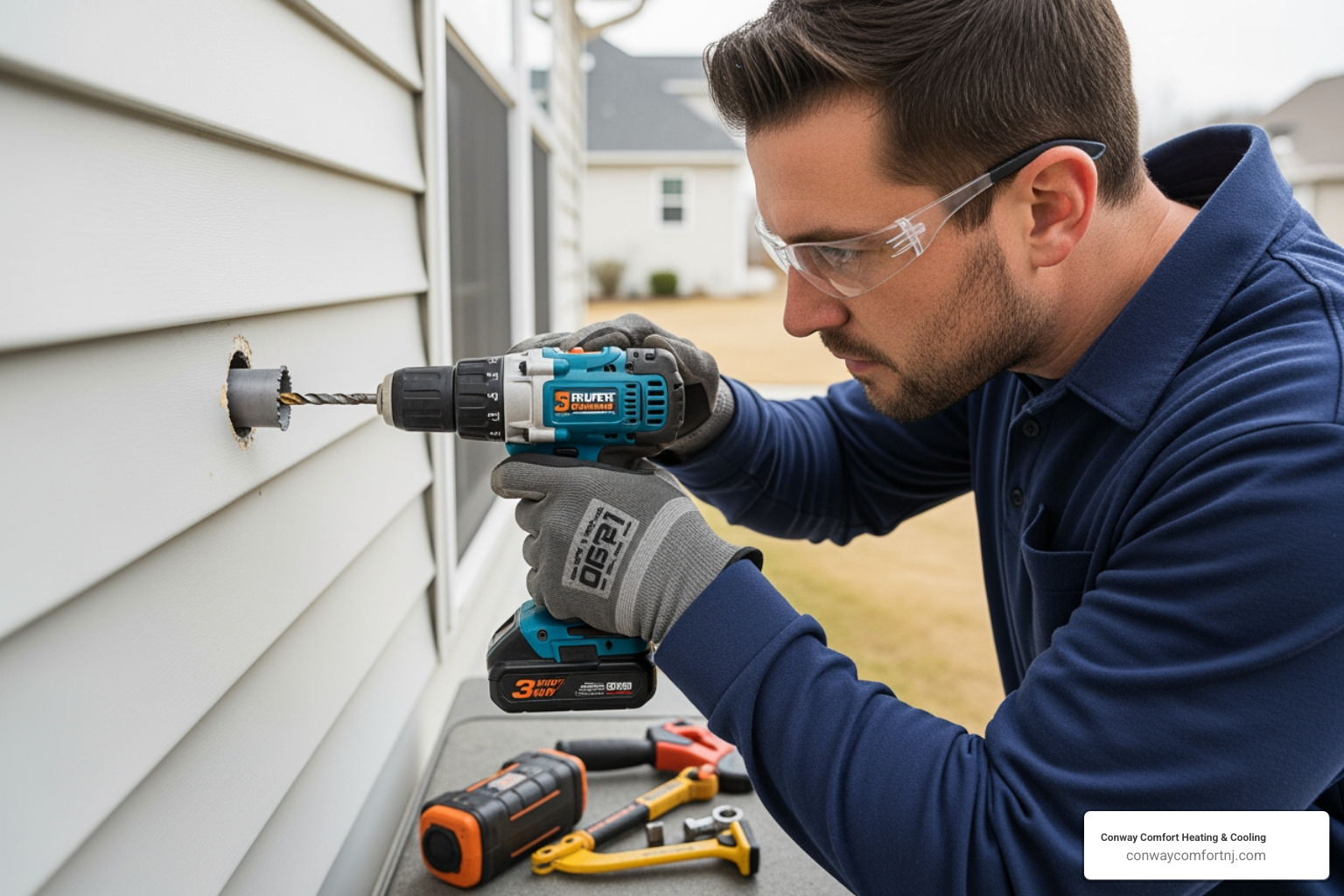
Installing a ductless mini split is much less invasive than a central air retrofit, but it still requires a professional touch. The process involves mounting the indoor unit, drilling a small 3-inch hole through the exterior wall for the conduit, and securing the outdoor condenser.
When we perform a ductless air conditioner installation in South Brunswick, NJ, we start with a “Manual J” calculation. This is a fancy way of saying we measure your room’s size, window locations, and insulation levels to ensure the unit is perfectly sized. If a unit is too big, it will “short cycle” (turn on and off too fast), leaving your room humid. If it’s too small, it will run constantly and drive up your bill.
Understanding Installation Costs and ROI
Let’s be honest: the upfront cost of a mini split is higher than a window unit or a basic central AC. However, you have to look at the Return on Investment (ROI). Switching to ductless mini splits can save you up to 60% on your heating and cooling costs if you’re currently using electric baseboard heat.
Because these systems can last up to 20 years with proper care, the long-term savings often pay for the initial investment several times over. For homeowners in Lawrence, NJ, the increase in home resale value is another factor to consider—modern buyers love energy-efficient, zoned climate control.
Tax Credits and Rebates in 2026
As of May 2026, the incentives for going green have never been better. Because many mini splits are ENERGY STAR certified, they qualify for significant financial help:
- Federal Tax Credits: Under current legislation, you may qualify for a tax credit of up to $2,000 for installing a high-efficiency heat pump.
- Utility Rebates: Local New Jersey utility companies often offer instant rebates to encourage residents to lower their energy footprint.
- Operational Savings: By heating and cooling with ductless mini splits, you avoid the price volatility of heating oil or natural gas.
Frequently Asked Questions about Ductless HVAC
How long do ductless mini splits last?
With professional installation and regular maintenance, a high-quality ductless mini split has a life expectancy of 15 to 20 years. This is significantly longer than the 10–12 years you might get from a central air unit that has to work against the “static pressure” of old, dusty ductwork.
The most critical factor for longevity is the health of the compressor. We tell our customers in East Windsor, NJ that the best way to protect that compressor is to keep the air filters clean so the system never has to “strain” to breathe.
Do mini splits work in cold climates?
This is a common myth! While early mini splits struggled when the temperature dropped below freezing, today’s “cold climate” models are incredible. Many units are tested to provide 100% heating capacity down to 5°F and can continue operating even when it hits -13°F.
In Monroe, NJ, where our winters can get bitey, a mini split is more than capable of keeping you toasty. However, for homes in extremely exposed areas, we sometimes discuss keeping your existing furnace as a backup for those rare “polar vortex” nights.
What maintenance is required?
Maintenance is actually very simple, but it’s non-negotiable:
- Clean the Filters: You should check your indoor unit’s reusable filters every 4–6 weeks. If they look dusty, just rinse them in the sink, let them dry, and pop them back in.
- Clear the Outdoor Unit: Make sure leaves, snow, or shrubs aren’t blocking the airflow of the outdoor condenser. It needs to “breathe” to transfer heat efficiently.
- Professional Tune-Ups: Once a year, have a technician from Conway Comfort come out to check refrigerant levels, clean the coils, and ensure the condensate drain is clear. This is especially important for residents in Plainsboro, NJ to keep your warranty valid.
Conclusion
The ductless mini split isn’t just a niche solution for “difficult” rooms anymore—it is a sophisticated, whole-home comfort system that is quickly becoming the standard for energy-efficient living. Whether you’re looking to save money on your monthly bills, solve the “hot room” problem in your Princeton home, or simply want the quietest HVAC system on the market, ductless is the way to go.
At Conway Comfort Heating & Cooling, we pride ourselves on transparent pricing and 24/7 customer-focused service. We live and work right here in Hamilton Township, and we treat every installation like it’s in our own home.
Ready to see if a ductless air conditioner is right for you? Reach out to us today and we’ll help you find the perfect system to keep your family comfortable for the next two decades.