
Why AC Maintenance Can Save You Money and Headaches This Summer
AC maintenance is one of the simplest things you can do to keep your home cool, your energy bills low, and your system running for years longer than a neglected unit would last.
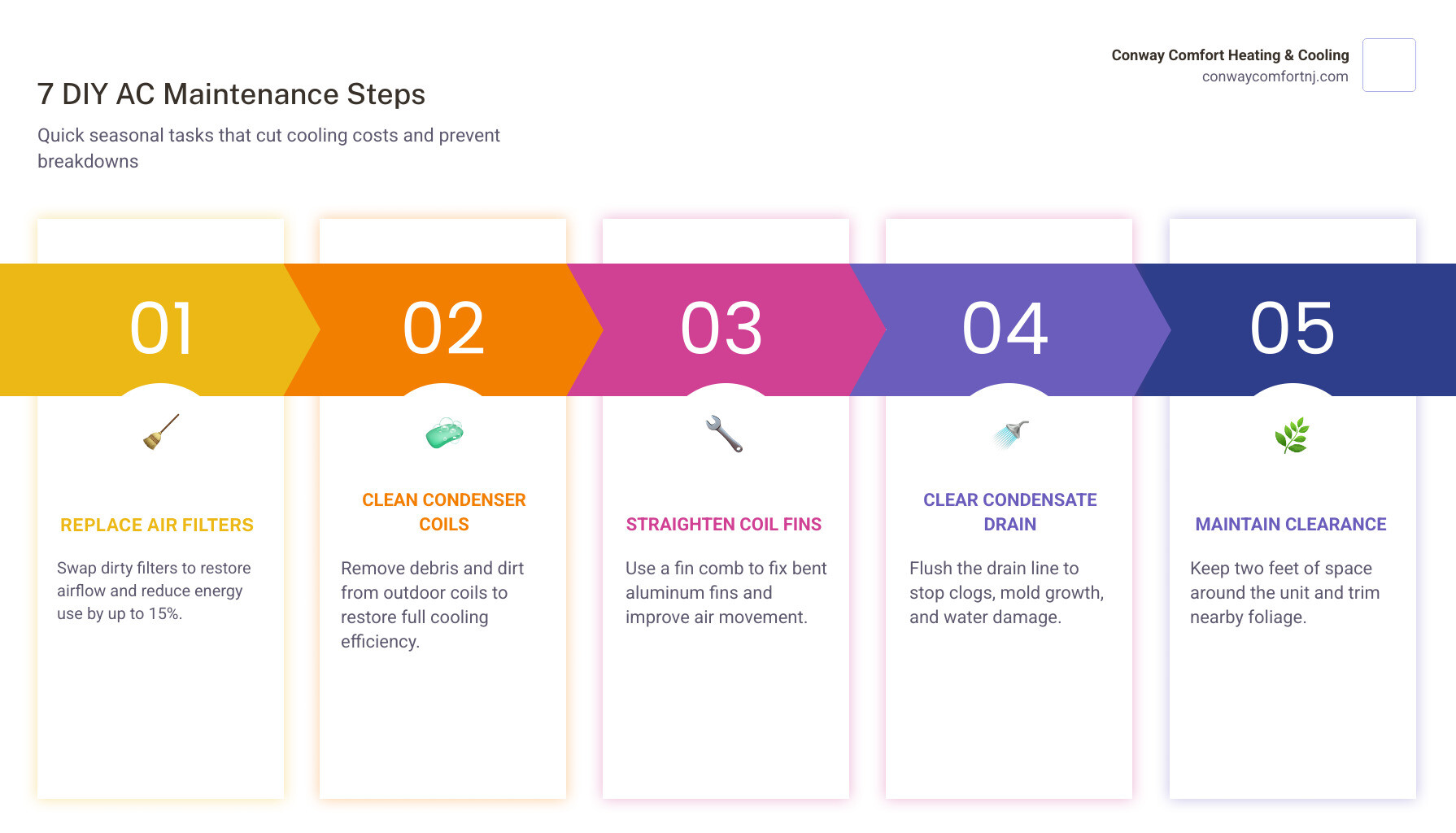
Here’s a quick overview of the 7 DIY AC maintenance steps covered in this guide:
- Replace or clean the air filters
- Clean the outdoor condenser coils
- Straighten bent coil fins
- Clear the condensate drain line
- Clean the area around the outdoor unit
- Inspect window seals and ductwork
- Test the thermostat and run a system startup
Most of these tasks take under an hour and require no special tools. Done once a year — ideally in spring before the heat hits — they can trim 10 to 25 percent off your summer cooling costs and help you avoid a breakdown on the hottest day of the year.
Skip any of them consistently, and you’re looking at a system that runs harder, costs more to operate, and wears out years sooner than it should.
I’m Brian Conway, owner of Conway Comfort Heating & Cooling, and I’ve spent over a decade helping New Jersey homeowners get more life and efficiency out of their AC systems through proper AC maintenance. In this guide, I’ll walk you through exactly what you can do yourself — and when it’s time to call a pro.
What is AC Maintenance and Why is It Crucial?
When we talk about AC maintenance, we are referring to the routine care, cleaning, and testing of your air conditioning system’s vital components. Just like you wouldn’t drive your car for 100,000 miles without changing the oil or checking the brakes, you shouldn’t expect an intricate mechanical system like an air conditioner to run flawlessly year after year without a little tune-up.
An air conditioner is a highly coordinated system that relies on balanced airflow, correct refrigerant levels, clean heat-exchange surfaces, and solid electrical connections. Over the course of a long winter and a humid Central New Jersey summer, dust, dirt, pollen, and lawn debris accumulate on your unit.
Neglecting this accumulation is one of the most common residential AC maintenance mistakes to avoid. When dirt coats the system, it acts as an insulating blanket. This makes it incredibly difficult for the system to transfer heat out of your home. The result? Your system works twice as hard to achieve the same cooling effect, leading to premature wear, skyrocketing utility bills, and eventual system failure. In fact, a system on a regular maintenance schedule routinely outlives a neglected one by three to five years!
The Core Benefits of Regular AC Maintenance
Investing a small amount of time and effort into maintaining your system yields massive returns. Here are the primary reasons why regular AC maintenance is non-negotiable for smart homeowners:
- Substantial Energy Savings: A clean, optimized air conditioner runs far more efficiently than a dirty one. When your system doesn’t have to fight restricted airflow or dirty coils, it consumes significantly less electricity.
- Lower Utility Bills: Did you know that dirty coils can reduce your system’s efficiency by 15% to 30%? This drop in performance can easily add an extra $30 to $60 a month to your electric bill. Keeping things clean ensures your money goes toward cooling your home, not paying for wasted energy.
- Extended System Lifespan: Central air conditioners are a major financial investment. While a neglected system might fail up to 5 to 7 years earlier than it should under harsh operating conditions, a well-maintained system can easily last 15 years or more.
- Warranty Protection: Many homeowners don’t realize that most major HVAC manufacturers require proof of annual professional maintenance to keep their factory warranties valid. If your compressor fails but you cannot provide service records, you could be left paying thousands of dollars out of pocket.
- Improved Indoor Air Quality: Your air conditioner is the lungs of your home. Regular cleaning prevents dust, mold, and airborne allergens from circulating through your living spaces.
To keep your system running smoothly through every season, it is also highly beneficial to understand why your AC needs winter maintenance. If you want to make sure your home is fully protected year-round, you can rely on our team for reliable HVAC services in Mercer County.
How to Do AC Maintenance in 7 Easy Steps
Ready to roll up your sleeves? Performing basic maintenance on your cooling system is incredibly rewarding, and you don’t need an engineering degree to do it.
Safety First: Before doing any work on your air conditioner, always shut off the power to the unit. For the outdoor unit, locate the metal disconnect box on the exterior wall near the system and pull out the safety switch or turn the breaker to the “off” position. For the indoor unit, switch off the corresponding breaker at your main electrical panel.
Let’s break down the process into seven straightforward steps.
Step 1: Replace or Clean the Air Filters
Replacing your air filter is the single most important maintenance task you can perform.
Dirty, clogged filters reduce airflow and system efficiency. When airflow is obstructed, dirt can bypass the filter entirely and accumulate directly on the indoor evaporator coil, severely reducing its heat-absorbing capacity.
- Where is it? In central systems, the filter is typically located along the return duct near the indoor air handler, or behind a return air grille on a wall or ceiling.
- What to do: Inspect the filter every month during peak cooling season. If you have a standard disposable pleated filter, replace it if it looks gray and clogged. If you have a reusable electrostatic filter, wash it thoroughly with a hose, let it dry completely, and reinstall it.
- How often? Replace or clean your filters every 30 to 90 days. If you have pets, live in a dusty environment, or suffer from allergies, check it every month.
- MERV Ratings: Choose a filter with an appropriate Minimum Efficiency Reporting Value (MERV). While higher MERV ratings catch smaller particles, filters that are too thick can restrict airflow and cause major performance issues. If you are already experiencing weak air circulation, explore these solutions for low airflow from your AC.
Step 2: Clean the Outdoor Condenser Coils
Your outdoor condenser unit is responsible for releasing the heat extracted from inside your home. Over time, the condenser coils collect dirt, grass clippings, leaves, and pollen, which blocks heat transfer.
- Step-by-step cleaning:
- Ensure the power is completely shut off at the outdoor disconnect box.
- Remove the outer protective grille or metal cage if your manufacturer’s manual permits.
- Gently brush away loose leaves, twigs, and grass from the exterior fins using a soft-bristle brush or vacuum cleaner.
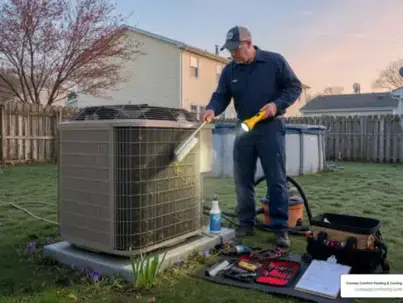
- Spray the coils from the inside out with a garden hose to wash away embedded grime.
- Crucial Warning: Never use a pressure washer! The high-pressure stream will instantly bend and destroy the delicate aluminum coil fins.
Step 3: Straighten Bent Coil Fins
The aluminum fins on your evaporator and condenser coils are incredibly thin and easily bent by hail, stray lawnmowers, or accidental bumps. Bent fins block the vital airflow passing through the coils, forcing the system to work harder.
- How to fix them: Purchase a cheap tool called a “fin comb” from your local hardware store. Match the comb’s tooth spacing to the spacing of your fins, and gently slide it through the bent areas to straighten them.
- Alternative method: If you don’t have a fin comb, you can use a standard dinner knife. Gently insert the knife no more than half an inch into the fins and apply light pressure to realign them. Be incredibly careful not to puncture the copper refrigerant tubes hidden behind the fins!
Step 4: Clear the Condensate Drain Line
As your air conditioner cools your home, it also dehumidifies the air. The moisture condensed from the air drips into a drain pan and flows outside through a plastic condensate drain line. Over time, algae, mold, and dust can create a thick clog in this line.
- The danger: A clogged drain line will cause water to back up, leading to expensive water damage to your ceilings or walls. In modern systems, a clog may trigger a safety switch that completely shuts down your AC.
- How to clear it: Locate the drain line outlet outside near your condenser unit. Hook up a wet-dry shop vacuum to the end of the line, seal the connection with a wet rag, and run the vacuum for a few minutes to suck out any built-up algae and sludge. You can also pour a cup of distilled white vinegar down the indoor access T-pipe periodically to prevent mold and algae from growing in the first place.
Step 5: Clean the Area Around the Outdoor Unit
Your outdoor condenser needs room to breathe. If it is choked by overgrown bushes, weeds, or stored items, it won’t be able to draw in enough air to cool down the refrigerant.
- Maintain clearance: Keep a minimum of two feet of clear space around the entire outdoor unit.
- Action steps: Trim back any shrubs, flowers, or low-hanging tree branches. Regularly clear away accumulated fallen leaves, mulch, and grass clippings from the base of the concrete pad. If the concrete pad underneath your unit has started to sink or tilt over time, contact a professional to level it, as an uneven unit can put severe physical strain on your copper refrigerant lines.
Step 6: Inspect Window Seals and Ductwork
All the cold air your system produces won’t do much good if it escapes through leaks before it reaches your living spaces.
- Window units: If you use room air conditioners, check the seals between the unit and the window frame at the start of each cooling season. Replace worn weatherstripping to keep the humid outdoor air outside.
- Central ductwork: Inspect accessible ductwork in your attic, basement, or crawlspace. Look for loose joints, holes, or disconnected sections. Use specialized duct mastic or foil tape (not standard cloth duct tape, which degrades quickly) to seal leaks. For professional, long-lasting duct sealing and local expertise, look into our Central Jersey HVAC solutions.
Step 7: Test the Thermostat and System Startup
The final step of your DIY routine is ensuring your system communicates correctly with your thermostat.
- How to test: Turn your thermostat back on, set it to “Cool” mode, and lower the temperature setting a few degrees below the current room temperature.
- What to listen and feel for: Listen for the outdoor condenser and indoor blower fan to kick on smoothly. Within a few minutes, you should feel crisp, cold air blowing consistently from your supply registers. If you want a complete list of pre-season tasks to ensure your system is fully prepared, check out our comprehensive pre-summer AC maintenance checklist.
Professional AC Maintenance: What to Expect and When to Schedule
While the DIY steps outlined above will keep your system in fantastic shape, they do not replace the need for an annual professional inspection. Some tasks require specialized tools, training, and diagnostic equipment to be performed safely and correctly.
| Task | DIY | Professional | Why It Matters |
|---|---|---|---|
| Air Filter Replacement | Yes | Yes | Keeps airflow clean and unrestricted. |
| Clear Debris & Trim Foliage | Yes | Yes | Ensures proper airflow around the outdoor unit. |
| Straighten Coil Fins | Yes | Yes | Prevents airflow blockages. |
| Check Refrigerant Levels | No | Yes | Requires EPA certification; incorrect levels destroy compressors. |
| Electrical Component Testing | No | Yes | Multimeter testing prevents electrical fires and component failures. |
| Deep Coil Cleaning | No | Yes | Professional-grade chemicals clean deep inside the coils safely. |
| Ductwork Leak Diagnostics | No | Yes | Specialized pressure testing locates hidden duct leaks. |
We recommend scheduling a professional AC tune-up once a year, ideally in the early spring before the summer rush begins. This timing ensures that if any worn-out parts are discovered, they can be replaced before they cause a complete system breakdown during a heatwave. If you are unsure whether your system is overdue for a visit, learn how to tell if it is time for an HVAC maintenance appointment.
What is Included in a Professional AC Maintenance Visit?
When a licensed technician from Conway Comfort Heating & Cooling performs a maintenance visit, we go far beyond basic cleaning. A comprehensive professional tune-up includes:
- Refrigerant Charge Testing: We measure the refrigerant pressure and temperature to ensure the system is charged exactly to manufacturer specifications. Low refrigerant indicates a leak, which we must locate and repair.
- Electrical Inspection: We tighten all electrical connections, measure voltage, and test the draw on your motors. We also inspect contactors and capacitors—which are the most common points of failure in summer—for signs of wear or bulging.
- Blower Motor & Fan Calibration: We inspect the indoor blower wheel, clean it if necessary, and lubricate any moving parts to reduce friction and wear.
- Thermostat Calibration: We verify that your thermostat is reading room temperatures accurately and cycling the system correctly.
- Comprehensive Diagnostics: We check the temperature split (the difference between the air entering and leaving the system) to verify peak thermodynamic efficiency.
To understand the full scope of these services, explore the AC tune-up services every homeowner should know.
Signs Your System Needs Immediate AC Maintenance or Repair
Even with the best DIY care, mechanical parts eventually wear out. It is crucial to recognize the warning signs that your system is struggling before it breaks down completely.
If you notice any of the following symptoms, shut down your system and call us immediately:
- Weak or Low Airflow: If you feel barely any air coming out of your vents, or if some rooms are freezing while others are boiling, you likely have a failing blower motor, blocked coils, or severe duct leaks.
- Warm Air Blowing from Vents: If your system is running but blowing lukewarm or hot air, you could be dealing with a failed compressor, a bad capacitor, or a severe refrigerant leak.
- Strange Noises: Your air conditioner should operate with a gentle hum. Loud squealing, grinding, banging, or rattling noises indicate loose components, failing motor bearings, or a damaged compressor.
- Musty or Burning Odors: A musty smell points to mold growth inside your dark evaporator coil or drain pan. A burning metallic smell indicates overheating electrical components or motor wiring.
- Frequent Cycling: If your system turns on and off every few minutes (short-cycling), it is under immense stress. This is often caused by an oversized system, clogged filters, or faulty thermostat communication.
Frequently Asked Questions about AC Maintenance
How much does AC maintenance typically cost?
A professional AC maintenance tune-up typically ranges from $89 to $149 for a single, standard system. Many HVAC companies offer seasonal tune-up specials.
At Conway Comfort Heating & Cooling, we believe in complete transparency, which is why we offer flat-rate, honest pricing with no hidden fees. We also provide comprehensive annual maintenance plans that include priority scheduling, discounts on repairs, and regular biannual visits. These plans easily pay for themselves by preventing major emergency repairs and lowering your monthly energy bills.
How often should homeowners schedule professional AC maintenance?
In Central New Jersey, you should schedule professional AC maintenance at least once a year, ideally in the spring. If you have a heat pump system that provides both heating and cooling year-round, you should have it serviced twice a year—once in the spring before the cooling season and once in the fall before the heating season.
Can regular maintenance prevent frozen AC coils?
Absolutely! Evaporator coils freeze over when they cannot absorb enough heat from your home’s air. This is almost always caused by restricted airflow (due to dirty air filters or blocked vents) or low refrigerant levels. Regular maintenance—specifically replacing your filters and cleaning your coils—keeps airflow moving smoothly and prevents ice from forming.
If you want to keep your system safe year-round, read our guide on how to prevent frozen AC coils in winter and summer.
Conclusion
Taking care of your air conditioner doesn’t have to be a daunting task. By following these 7 easy DIY steps, you can protect your investment, lower your monthly bills, and enjoy uninterrupted, crisp comfort all summer long.
However, DIY maintenance is only half the battle. To ensure your system’s electrical systems, refrigerant levels, and internal components are completely safe and optimized, you need a professional touch.
At Conway Comfort Heating & Cooling, we are proud to serve our neighbors throughout Central Jersey, including Hamilton Township, Mercer County, Bordentown, Cranbury, East Windsor, Hamilton, Lawrence, Plainsboro, Princeton, and Trenton. Located at 127 Route 206 Suite 22, Hamilton Township, NJ 08610, we are your local, family-owned comfort experts.
With our transparent pricing and 24/7 customer-focused service, you never have to worry about surprise fees or being left in the heat. Let us handle the hard work so you can enjoy total peace of mind. Give us a call and schedule your professional AC maintenance today!