
Why Choosing the Right Air Purifier for Allergy Sufferers Makes All the Difference
If you are dealing with constant sneezing, itchy eyes, or waking up congested every single morning, finding the best air purifier for allergy sufferers could be one of the most impactful changes you make to your home environment. Indoor air quality plays a massive role in our overall health, yet it is often overlooked until symptoms become unbearable.
Quick Answer: Best Air Purifiers for Allergy Relief
| Use Case | What to Look For |
|---|---|
| Best overall | True HEPA filter + high CADR rating |
| Small bedrooms | CADR 90-150 CFM, quiet sleep mode |
| Medium rooms | CADR 200-250 CFM, covers 350-465 sq ft |
| Large living spaces | CADR 250+ CFM, covers 465+ sq ft |
| Pet allergies | True HEPA + activated carbon filter |
| Whole home | HVAC-integrated air purification system |
Here is something that surprises most homeowners: the air inside your home can actually be significantly more polluted than the air outside. The EPA lists indoor air pollution among the top five environmental health risks, and Americans spend roughly 90% of their lives indoors. That means the air quality in your living room, bedroom, and office matters enormously, especially if you suffer from seasonal or year-round allergies.
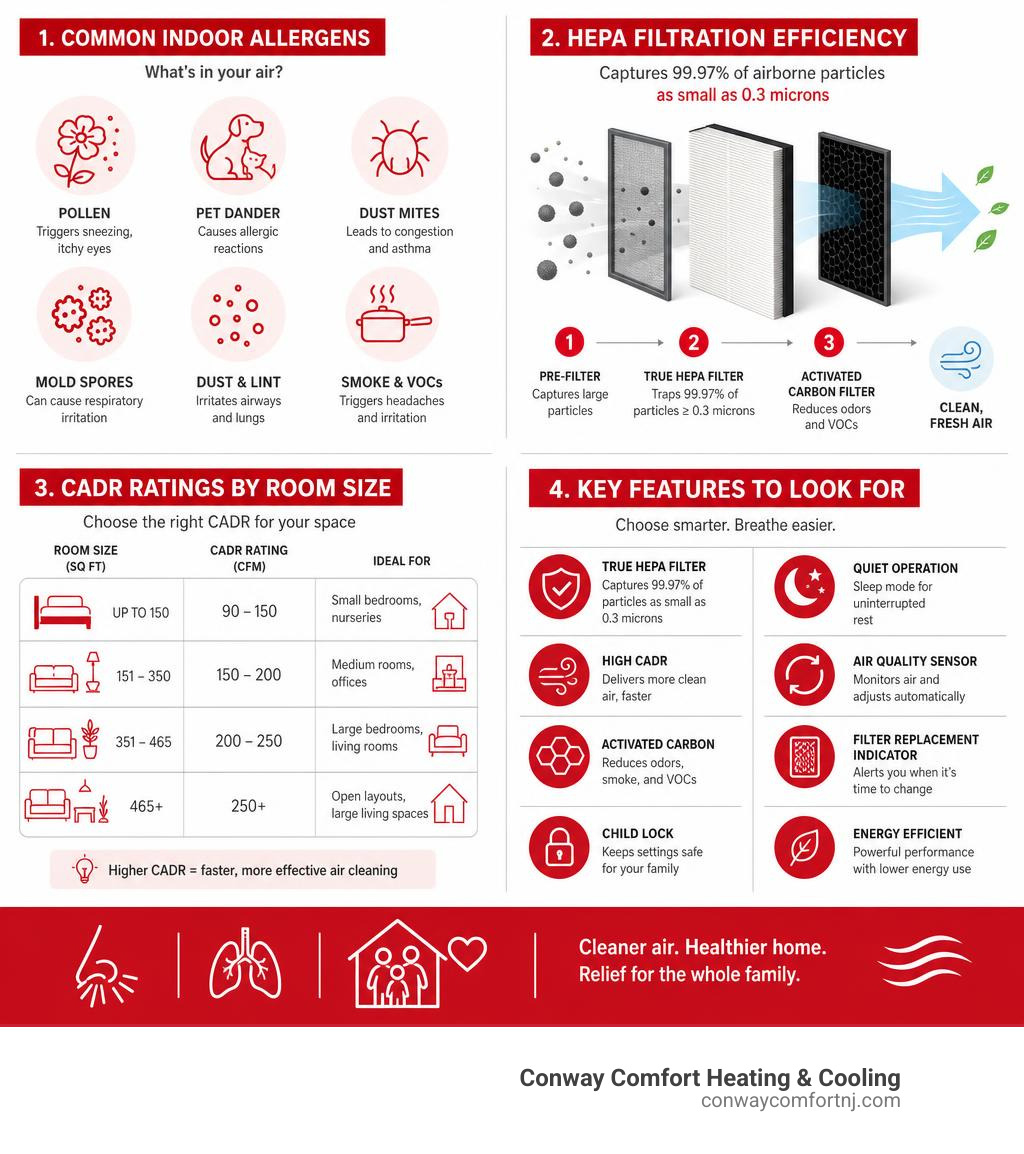
Indoor allergens like pollen, pet dander, dust mites, and mold spores can trigger symptoms just as severe as anything you would encounter outside. The good news is that the right air purifier, one with a certified True HEPA filter and an appropriate CADR rating for your room size, can capture 99.97% of airborne particles as small as 0.3 microns, providing real, measurable relief.
This guide compares the top-rated options so you can find the right fit for your home and your specific allergy triggers. We will explore how these systems operate, what key metrics you need to look for, and how to choose between portable units and comprehensive whole-home systems.
I am Brian Conway, owner of Conway Comfort Heating & Cooling, and through years of helping homeowners in the Hamilton Township, NJ area improve their indoor environments, I have seen how the right air purifier for allergy sufferers can transform daily comfort. Whether you are managing seasonal pollen or year-round pet dander, I will walk you through what actually works to keep your breathing air clean and healthy.
Common Indoor Allergens and Their Impact on Health
To successfully clear your air, you first need to know what you are fighting. Many homeowners in Mercer County, NJ find themselves sneezing year-round without realizing that their heating and cooling systems are circulating microscopic irritants. When these particles are continuously recirculated, your immune system remains on high alert, leading to chronic fatigue and respiratory discomfort.
When we talk about allergen triggers, we are looking at several distinct particles that behave differently in your living space:
- Pollen: While we often associate pollen with the great outdoors, these microscopic grains easily hitch a ride inside on our clothes, shoes, and pets. Once inside, they settle into carpets and upholstery, getting kicked back into the air every time you walk across the room.
- Pet Dander: If you share your home with furry companions, pet dander is a constant companion. Dander consists of tiny, lightweight flakes of skin shed by cats, dogs, and other animals. Because it is so light, it can remain airborne for hours, making it incredibly easy to inhale.
- Mold Spores: Mold thrives in damp areas like basements, bathrooms, and crawl spaces. When mold reproduces, it releases microscopic spores into the air. If inhaled, these spores can trigger severe respiratory symptoms, coughing fits, and asthma attacks.
- Dust Mites: These microscopic pests thrive in warm, humid environments. They make their homes in mattresses, bedding, and carpets. It is actually their waste products, rather than the mites themselves, that act as highly potent allergen triggers.
These particles represent some of the most common indoor air pollutants that compromise your breathing. When inhaled, they irritate the sensitive linings of your nasal passages and lungs, leading to the classic symptoms of allergic rhinitis: sneezing, congestion, itchy eyes, and persistent fatigue. For those with asthma, these pollutants can easily trigger a severe flare-up, making high-quality filtration an absolute necessity for maintaining a safe home environment.
Choosing the Right Air Purifier for Allergy Sufferers
Selecting an air purifier for allergy sufferers requires looking past flashy marketing and focusing on verified performance metrics. To get the relief you deserve, you must match the unit’s capabilities to your specific room dynamics.
Understanding how residential air purifiers work is the first step toward making an educated purchase. These devices function by drawing dirty room air through a series of filters, trapping the unwanted particles, and releasing clean, scrubbed air back into the room.
Key Features of an Air Purifier for Allergy Sufferers
When shopping for a portable unit, look for three non-negotiable features:
- True HEPA Filtration: This is the gold standard for allergy relief. A True HEPA filter is certified to capture at least 99.97% of particles as small as 0.3 microns. Avoid units labeled “HEPA-like” or “HEPA-type,” as they lack the density required to catch microscopic pollen and dander.
- AHAM Verification: The Association of Home Appliance Manufacturers (AHAM) independently tests air purifiers. Look for their seal to guarantee that the manufacturer’s performance claims are accurate.
- Clean Air Delivery Rate (CADR): This rating tells you exactly how fast the unit filters dust, tobacco smoke, and pollen. A higher CADR means faster, more efficient air cleaning. For example, high-quality smart air purifiers utilize advanced quiet-fan technology to deliver high CADR ratings while operating quietly, making them excellent choices for bedrooms and mid-sized living spaces.
Sizing an Air Purifier for Allergy Sufferers
An air purifier can only do its job if it is sized correctly for the room. A unit that is too small will run constantly on its highest, loudest setting without ever truly clearing the air.
To size your unit correctly, look at the square footage coverage and the Air Changes per Hour (ACH) rating. For allergy sufferers, you want a unit that can provide at least 4 to 5 air changes per hour. This means the machine completely refreshes all the air in the room every 12 minutes.
If you have a large open-concept living area, a high-capacity multi-directional air purifier can circulate air in multiple directions, ensuring that no dead zones of stagnant, pollen-heavy air are left behind. Additionally, pay close attention to noise levels. You want a machine that offers a dedicated sleep mode, allowing it to run quietly at night so your sleep remains undisturbed.
Comparing Top Filtration Technologies for Allergy Relief
Not all air filters are created equal. To help you understand what goes on inside these machines, we have broken down the most common filtration technologies used today.
| Filter Type | Primary Target | Particle Size Captured | Best For |
|---|---|---|---|
| Pre-Filter | Hair, large dust clumps, pet fur | 10 microns and larger | Extending the life of your main HEPA filter |
| True HEPA | Pollen, mold spores, dust mites, dander | Down to 0.3 microns | Absolute allergen removal and respiratory relief |
| Activated Carbon | Odors, smoke, chemical fumes, VOCs | Gas molecules (sub-micron) | Eliminating pet odors and cooking smells |
To keep your home comfortable, especially during the peak allergy seasons in places like Plainsboro, NJ or Princeton, NJ, you will want a multi-stage system that combines these technologies. Investing in proper air purification for your home in spring ensures that as tree pollen counts spike, your indoor environment remains a safe haven.
True HEPA Filters vs. HEPA-Type Alternatives
The difference between True HEPA and HEPA-type filters is massive when it comes to your health. True HEPA filters must meet strict federal standards, proving they can trap 99.97% of microscopic particles.
HEPA-type filters, on the other hand, are unregulated. They may look similar to the naked eye, but their fibers are much looser. This allows tiny allergens, the very ones that lodge deep in your lungs and trigger asthma attacks, to pass right through the filter and back into your breathing zone. For true medical-grade relief, settling for anything less than a certified True HEPA filter is simply not worth it.
Activated Carbon and Odor Control
While HEPA filters are unmatched at stopping solid particles, they cannot trap gases, odors, or volatile organic compounds (VOCs). That is where activated carbon comes in.
Activated carbon filters undergo a chemical treatment that creates millions of tiny pores between the carbon atoms. This structure traps gas molecules, neutralizing odors from cooking, smoke, and chemical cleaners. If you are a pet owner, combining a True HEPA filter with a thick carbon filter provides the ultimate setup. It allows you to tackle airborne dander and stubborn pet odors simultaneously, helping you maintain a fresh, healthy home. For more tailored advice, you can explore specialized air quality solutions for pet owners to keep your living spaces clean and comfortable.
Whole-Home Air Quality Solutions vs. Portable Units
As you look for ways to clean your air, you will face a major decision: should you buy portable room purifiers or invest in a whole-home system? Both options have their place, but they serve very different needs.

Portable Air Purifiers for Targeted Rooms
Portable units are excellent for renters or those who want to target a single, specific room. Placing a portable unit in your bedroom is a fantastic way to secure localized relief where you spend a third of your life. They are easy to set up, plug into any standard outlet, and can be moved from room to room as needed. However, their coverage is strictly limited to the room they are in, and they can sometimes take up valuable floor space. If you have a larger home, buying multiple portable units can quickly become expensive and high-maintenance.
Whole-Home Air Purification Systems
If you want comprehensive protection for every room in your house, a whole-home system is the ultimate solution. These systems integrate directly into your central HVAC ductwork. Every time your heating or cooling system runs, it pulls air from every corner of your home, passes it through a high-efficiency filter, and distributes clean air back to every room.
This setup eliminates the need for noisy, bulky portable units in every bedroom. It provides consistent, quiet, and highly efficient filtration for your entire household. If you are curious about advanced central options, learning about what air scrubbers are and if they are worth it can help you decide if a professional, commercial-grade system is right for your home.
Frequently Asked Questions about Allergy Air Purifiers
Do air purifiers really help with allergies?
Yes, high-quality air purifiers are highly effective at reducing allergy symptoms. By continuously filtering the air, they remove airborne particles like pollen, pet dander, and mold spores before you can inhale them. This leads to a noticeable reduction in sneezing, congestion, and itchy eyes, especially when used in bedrooms where you spend long periods of time.
What is the best type of filter for allergy sufferers?
A certified True HEPA filter is the absolute best option for allergy sufferers. It is designed to trap 99.97% of airborne particles down to 0.3 microns, which covers almost all common indoor allergens. For the best results, pair it with a pre-filter to catch large dust clumps and an activated carbon filter to neutralize odors and gases.
How often should I replace my air purifier filter?
Typically, True HEPA filters should be replaced every 6 to 12 months, while activated carbon filters should be changed every 3 to 6 months. However, this schedule depends on your indoor air quality and how often you run the unit. Failing to replace filters on time reduces airflow and prevents the machine from cleaning your air effectively.
Where is the best place to put an air purifier for allergies?
The best place to position an air purifier is in your bedroom, close to the head of your bed, since this is where you spend the most consecutive hours breathing. Ensure the unit is placed at least a few inches away from walls and furniture to prevent airflow obstruction, allowing it to draw in and circulate air freely.
Can an air purifier remove pet hair and dander?
Yes, an air purifier equipped with a pre-filter and a True HEPA filter is excellent for managing pet allergens. The pre-filter captures large pet hair and fur, preventing the main filter from clogging, while the dense True HEPA filter traps the microscopic dander that triggers allergic reactions.
What does CADR mean when choosing an air purifier?
CADR stands for Clean Air Delivery Rate. It measures the volume of filtered air an air purifier delivers per minute, with separate ratings for smoke, dust, and pollen. When choosing a unit, look for a CADR rating that is at least two-thirds of your room’s total square footage to ensure efficient cleaning.
Do air purifiers run quietly enough for bedrooms?
Most modern air purifiers are designed with quiet operation in mind. Many models feature a dedicated sleep mode that drops the fan speed to its lowest setting, reducing noise levels to a whisper-quiet 20 to 24 decibels. This allows you to enjoy clean air all night long without interrupting your sleep.
Can whole-home air purifiers replace portable units?
Yes, whole-home systems integrated into your central HVAC ductwork provide comprehensive filtration for your entire house, eliminating the need for individual portable units. They clean the air in every room simultaneously and operate silently behind the scenes without taking up any floor space.
Do air purifiers eliminate mold and dust mites?
Air purifiers are highly effective at capturing airborne mold spores and dust mite debris, which drastically reduces your exposure to these triggers. However, they cannot eliminate the actual sources of mold or dust mites living in damp drywall, carpets, or bedding. You must still manage indoor humidity levels to keep these pests under control.
How much electricity does an air purifier use?
Most portable air purifiers are highly energy-efficient, typically using between 30 and 80 watts of electricity depending on the fan speed. Running a standard unit 24/7 generally costs only a few dollars per month, making it an incredibly cost-effective way to maintain healthy indoor air quality.
Conclusion
Finding relief from seasonal and year-round allergies does not have to be a constant struggle. By choosing an air purifier for allergy sufferers that features True HEPA filtration, a high CADR rating, and the right capacity for your living space, you can take control of your indoor environment and finally breathe easy.
While portable units are great for quick, localized relief in a single bedroom, a whole-home system offers the ultimate peace of mind by cleaning the air in every room of your house automatically. This comprehensive approach ensures that your entire family is protected from airborne irritants, no matter which room they are in.
Whether you need professional indoor air quality upgrades, seasonal HVAC maintenance, or a complete system installation, the team at Conway Comfort Heating & Cooling is ready to help. We are proud to serve homeowners throughout Hamilton Township, NJ and the surrounding Mercer County communities with transparent pricing and dependable, customer-focused service.
Whether you need fast AC repairs, seasonal HVAC maintenance, or a complete system replacement, the team at Conway Comfort Heating & Cooling is ready to help. Contact us to schedule your professional HVAC service today.