
Why Air Purification Matters More Than You Think
Air purification is the process of removing harmful particles, gases, and contaminants from indoor air to make it safer and more comfortable to breathe. If you want a quick answer on what it covers, here it is:
What air purification does:
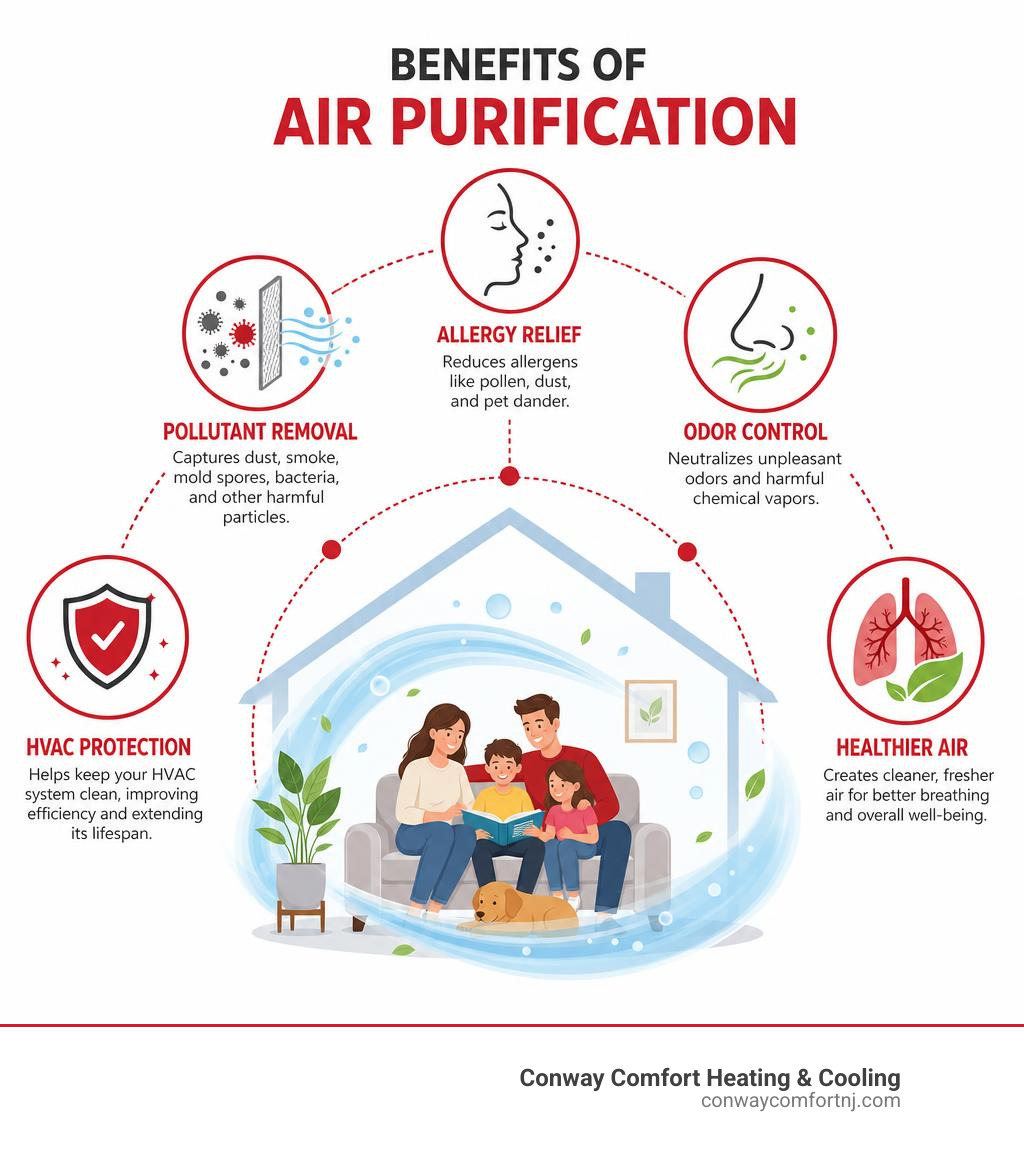
- Removes airborne particles like dust, pollen, and pet dander
- Captures bacteria, viruses, and mold spores
- Neutralizes odors and chemical vapors (VOCs)
- Reduces wildfire smoke and fine particle pollution (PM2.5)
- Supports healthier breathing for allergy and asthma sufferers
Most people assume outdoor air is the bigger concern. But according to the EPA, concentrations of certain pollutants can be two to five times higher indoors than outside. That number gets worse in winter, when homes and businesses are sealed tight and HVAC systems recirculate the same air over and over.
Think about that. The air inside your home or office could be significantly more polluted than the air on a busy street outside. And most of the time, you can’t see it, smell it, or feel it until health problems start showing up.
This guide covers everything you need to know about air purification, from how the technology works to how to choose the right system for your home or business in Hamilton Township, NJ.
I’m Brian Conway, owner of Conway Comfort Heating & Cooling, and since founding the company in 2011 I’ve helped countless homeowners and businesses throughout Central New Jersey tackle air purification challenges as part of building healthier, more comfortable indoor environments. In this guide, I’ll walk you through everything we’ve learned from years of hands-on HVAC and indoor air quality work.
Understanding Indoor Air Quality and Pollutant Concentration
To understand why we need air purification, we first have to look at what is actually floating around in our indoor spaces. Indoor air quality, often abbreviated as IAQ, refers to the condition of the air inside and around buildings, particularly as it relates to the health and comfort of the people inside.
When we test the air in homes across Mercer County, NJ, we find a complex cocktail of particles and gases. These contaminants generally fall into three main categories:
- Particulate Matter (PM): This includes visible and invisible particles like dust, dirt, pollen, pet dander, and microscopic mold spores. It also includes PM2.5, which are fine particles from cooking, fireplaces, or outdoor wildfire smoke that can travel deep into your lungs.
- Biological Contaminants: These are living organisms or their byproducts, such as bacteria, viruses, dust mites, and airborne mold.
- Gases and Volatile Organic Compounds (VOCs): These are chemical vapors released from common household items. Think of cleaning products, paints, new furniture, adhesives, and even synthetic fragrances.
Exposure to these common indoor air pollutants can lead to immediate discomfort, including itchy eyes, headaches, fatigue, and sneezing. Over the long term, breathing in highly concentrated pollutants can contribute to chronic respiratory issues, asthma flareups, and other serious health concerns.
How Modern HVAC Systems and Building Design Concentrate Pollutants
In the past, homes and commercial buildings were drafty. While those drafts made buildings less energy-efficient, they allowed a constant exchange of indoor and outdoor air, which naturally diluted indoor pollutants.
Today, building codes emphasize tight building envelopes. We seal up our homes in Cranbury, NJ and East Windsor, NJ with heavy insulation, house wraps, and double-paned windows to keep heated or cooled air from escaping.
While this is fantastic for your utility bills, it creates a major challenge for your breathing. Without proper ventilation, the same air is recirculated through your HVAC ductwork over and over. The contaminants we generate from daily activities, such as cooking, cleaning, and simply breathing, become increasingly concentrated. This makes maintaining clean indoor air a deliberate task that requires dedicated air quality solutions.
The Science of Air Purification: How Modern Systems Clean Your Indoor Air
Air purification systems use different scientific methods to capture or neutralize contaminants. Understanding how these technologies work is key to choosing the right setup for your property.
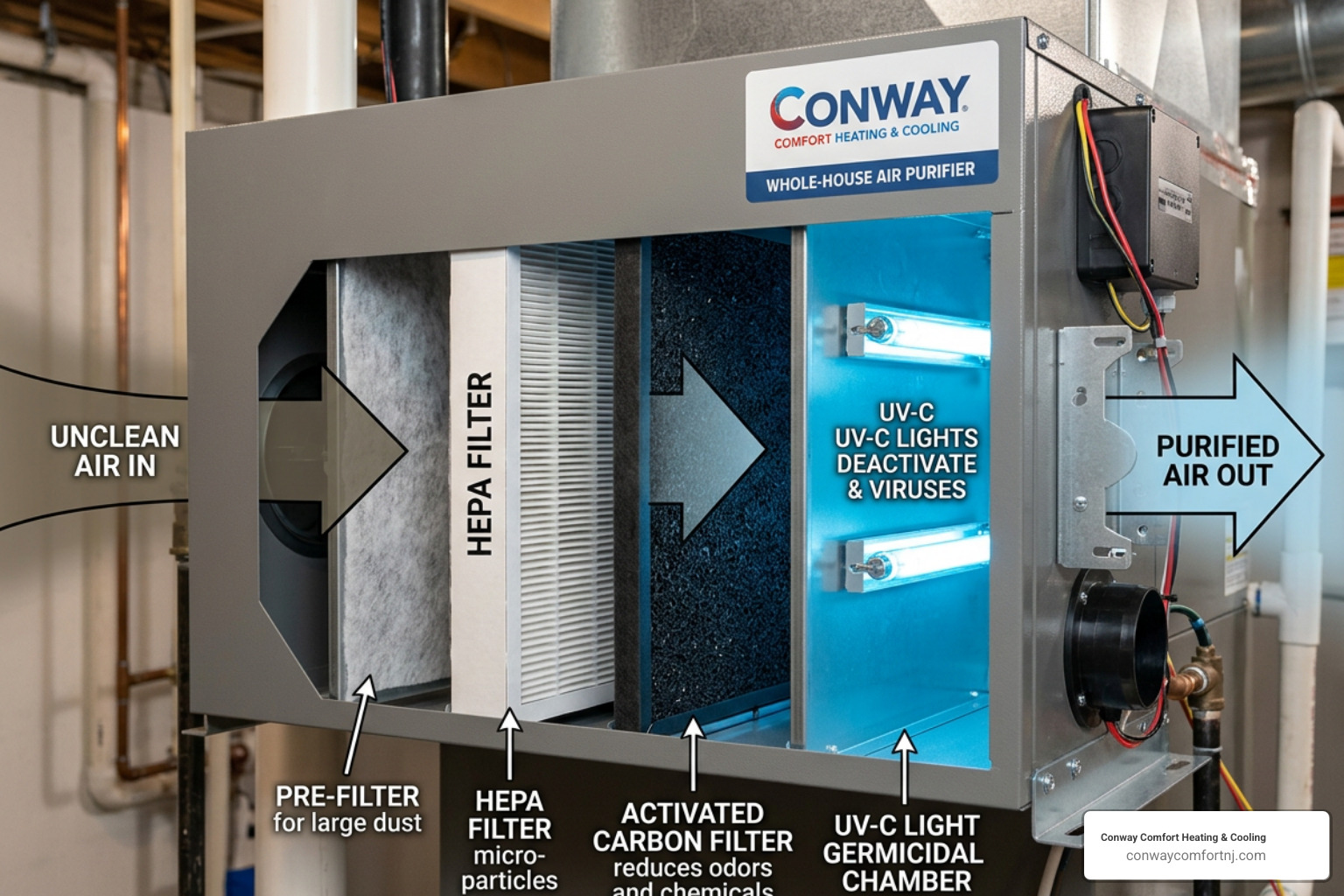
The three most common technologies used in residential and commercial systems are mechanical filtration, sorbent filtration, and ultraviolet sanitization.
- Mechanical Filtration (HEPA): High-Efficiency Particulate Air filters use a dense, randomly woven mat of fiberglass fibers to trap particles. True HEPA filters are certified to capture 99.97% of particles as small as 0.3 microns. They are incredibly effective at stopping dust, pollen, pet dander, and many airborne pathogens.
- Sorbent Filtration (Activated Carbon): Mechanical filters cannot stop gases or odors because gas molecules are too small. Activated carbon filters solve this. The carbon is treated with oxygen to open up millions of tiny pores between the carbon atoms, creating a massive surface area that physically traps and adsorbs chemical fumes, VOCs, and kitchen odors.
- Ultraviolet (UV) Lights: Instead of trapping particles, UV air purifiers use short-wave ultraviolet light (UV-C) to target biological contaminants. As bacteria, viruses, and mold spores pass through the light, the UV radiation disrupts their DNA, rendering them harmless and unable to reproduce.
Here is a quick comparison of how these technologies stack up:
| Filtration Type | Best For | How It Works | Maintenance Needs |
|---|---|---|---|
| HEPA Filters | Dust, pollen, dander, mold spores, PM2.5 | Physical trapping in dense fiber mesh | Replace every 6 to 12 months |
| Activated Carbon | Odors, VOCs, chemical fumes, smoke gases | Adsorption into porous carbon | Replace every 3 to 6 months |
| UV Lights | Viruses, bacteria, living mold spores | DNA disruption via UV-C light | Replace bulbs every 12 to 24 months |
Comparing Whole-Home Air Purification Systems
While portable, single-room air purifiers can be useful for targeted areas, they only clean the air in their immediate vicinity. For comprehensive protection, a whole-home system integrated directly into your central HVAC ductwork is the gold standard.
These systems clean the air every time your heating or cooling system runs. One of the most effective options on the market is the advanced whole-home air purification systems, which combines hospital-grade MERV 16 filtration with UVA light and carbon-treated media. This combination removes over 99% of virus-sized particles and neutralizes household odors in one pass.
When deciding on the right approach for your home, it helps to look at a UV air sanitizers vs air purifiers comparison to see whether you need to target biological pathogens, airborne particulates, or both.
How Air Scrubbers and Active Technologies Work
Standard filters are passive, meaning they wait for pollutants to travel through the ductwork to be trapped. Active technologies, such as air scrubbers, take the fight directly to the pollutants in your living spaces.
Many modern air scrubbers use photocatalytic oxidation (PCO). This technology combines UV light with a titanium dioxide-coated target. When the light hits the target, it creates friendly oxidizers (such as hydroperoxides and superoxides) that are swept out into your home through the air vents.
These oxidizers actively seek out and neutralize bacteria, viruses, mold, and odor molecules in the air and on surfaces like countertops and doorknobs. If you want to dive deeper into this process, you can read about how air scrubbers remove indoor air pollutants to keep your family safe.
Residential vs. Commercial Air Quality Demands
The approach to air purification changes dramatically depending on whether we are treating a cozy family home or a bustling commercial facility.
Commercial spaces present unique challenges due to their sheer size, high occupancy rates, and strict building codes. A commercial HVAC system must handle a much larger volume of air and introduce constant fresh outdoor air, all while managing localized pollution sources like commercial kitchens, office printers, or industrial manufacturing processes.
Commercial Air Purification Solutions for NJ Businesses
For businesses in Princeton, NJ and Hamilton, NJ, maintaining high indoor air quality is not just about comfort, it is about safety, productivity, and regulatory compliance.
- Offices and Schools: High density means viruses and bacteria can spread quickly. Implementing high-efficiency filtration and active air purification helps reduce absenteeism and keeps employees and students healthy.
- Healthcare Facilities: Doctors’ offices and clinics require clean environments. Hospital-grade filtration and heavy-duty UV sanitization are essential for protecting vulnerable patients.
- Industrial and Municipal Buildings: Facilities dealing with manufacturing, dust, or public services require specialized dust collection and fume extraction systems to keep workers safe and comply with OSHA standards.
Tailoring Systems to Air Quality Needs for Homes
In residential settings, our focus is usually on personal health, comfort, and addressing specific household concerns like pets or seasonal allergies.
If you sleep with your pets in the bedroom, pet dander and hair can severely impact your sleep quality. Designing a residential strategy involves evaluating your specific layout and lifestyle to determine the right mix of whole-home systems and targeted portable units. You can learn more about finding the right balance by exploring air purification needs for homes.
For targeted, single-room solutions, advanced portable units like the advanced portable air purifiers combine True HEPA filtration with a sleek, quiet design that fits beautifully into bedrooms or home offices.
How Air Quality Systems Protect Your HVAC Investment
Investing in air purification does not just protect your lungs, it also protects your wallet by preserving your heating and cooling equipment.
Your HVAC system relies on steady, unobstructed airflow to heat and cool your property efficiently. When dust, pet hair, and dander bypass standard filters, they settle on critical internal components like the blower motor, fan blades, and the evaporator coil.
A dirty evaporator coil cannot transfer heat effectively, which forces your system to run longer and work harder to achieve the desired temperature. This extra strain leads to higher utility bills and premature equipment breakdowns.
Maximizing HVAC Efficiency and Lifespan
By installing a high-quality whole-home air purifier, you capture these particles before they can enter your system. Keeping the internal components clean helps maintain optimal static pressure, lowers your monthly energy consumption, and can add years to the lifespan of your furnace or AC unit.
In fact, replacing a dirty, clogged filter with a clean one can lower your cooling system’s energy consumption by up to 15%. This highlights the absolute importance of changing air filters on a strict schedule.
Key Considerations When Selecting an Air Quality System
With so many options available, choosing the right system can feel overwhelming. To make an informed decision, keep these key factors in mind:
- Clean Air Delivery Rate (CADR): This rating measures an air purifier’s effectiveness based on room size and the volume of clean air produced per minute. Make sure the system you choose is rated for the square footage of your space.
- Filtration Level (MERV Ratings): Ensure your central HVAC system can handle the filter thickness and efficiency rating you want to install. A filter with a MERV rating that is too high can restrict airflow if your system is not designed for it.
- Ongoing Maintenance Costs: Factor in the price and lifespan of replacement filters and UV bulbs so there are no surprises down the road.
Professional Support for Engineers, Contractors, and Building Owners
For complex installations, especially in commercial or municipal properties, it is best to consult with professional HVAC experts.
At Conway Comfort Heating & Cooling, we support local building owners, engineers, and contractors by performing professional air quality evaluations, specifying equipment, and designing custom solutions that balance air cleaning power with system efficiency. If you are new to these systems, starting with the basics of how air purifiers work can help you ask the right questions during your consultation.
Frequently Asked Questions About Air Quality
What is the difference between a standard air filter and an air purifier?
A standard AC or furnace filter is designed to protect your HVAC equipment from large dust particles and debris. An air purifier is designed to clean the air you breathe by actively or passively capturing microscopic particles, biological pathogens, and chemical gases that standard filters miss.
How often should I replace the filters in my air quality system?
Standard one-inch filters should be replaced every 1 to 3 months. Media filters that are 4 to 5 inches thick typically last 6 to 12 months. Always consult your manufacturer’s guidelines, as homes with pets, smokers, or heavy allergy sufferers may need more frequent replacements.
Can an air purifier capture viruses and bacteria?
Yes, high-efficiency systems like True HEPA filters can capture microscopic pathogens, including some bacteria and viruses. Additionally, systems incorporating UV-C light or active air scrubbers are highly effective at neutralizing these biological contaminants as they pass through the system.
Do air purifiers help reduce dust and pet dander?
Absolutely. Air purifiers equipped with mechanical filtration are highly effective at capturing airborne dust, pollen, and pet dander, keeping these common allergens from settling on your furniture and entering your respiratory system.
What is CADR and why does it matter?
CADR stands for Clean Air Delivery Rate. It measures how quickly an air purifier filters tobacco smoke, dust, and pollen from a specific room size. A higher CADR indicates the unit can clean the air faster and cover a larger space.
Are air purifiers energy-efficient?
Most modern whole-home and portable air purifiers are designed with energy efficiency in mind. Choosing models with Energy Star certification ensures they use up to 40% less energy than standard models, allowing you to run them continuously without a massive spike in your electric bill.
Do air purifiers eliminate odors and VOCs?
Only if they include an activated carbon filter or an active technology like photocatalytic oxidation. Standard mechanical filters cannot capture gases, so a specialized carbon or chemical sorbent stage is required to neutralize odors and chemical vapors.
Can plants replace mechanical air purifiers?
While some houseplants can absorb tiny amounts of VOCs through soil microbes, they cannot capture airborne dust, pet dander, or living viruses. Plants are a lovely supplemental addition to a room, but they cannot replace the power of a mechanical air purifier.
How does indoor air quality affect commercial building occupants?
Poor indoor air quality can lead to headaches, fatigue, and eye irritation, which directly reduces employee productivity and increases sick days. Providing clean air creates a healthier, more comfortable environment that supports focus and well-being.
What is the benefit of integrating an air purifier with my HVAC system?
An integrated whole-home air purifier cleans the air across your entire property using your existing ductwork. It operates quietly and seamlessly behind the scenes, protecting your HVAC equipment from dust buildup while providing uniform air cleaning.
Conclusion
Achieving healthy indoor air does not have to be a guessing game. Whether you are dealing with seasonal allergies, pet dander, or commercial ventilation challenges, the right air purification system can completely transform your indoor environment.
At Conway Comfort Heating & Cooling, we are proud to provide honest, reliable, and professional indoor air quality services to our neighbors in Hamilton Township, NJ and the surrounding Mercer County, NJ communities. We believe in transparent pricing and deliver 24/7 customer-focused service to keep your home or business safe and comfortable.
Whether you need professional indoor air quality services, seasonal HVAC maintenance, or a complete system upgrade, the team at Conway Comfort Heating & Cooling is ready to help. Give us a call and schedule your professional indoor air quality services today to protect your home and breathe easier all year long!